




AdaptIT's Clinical Prediction Engine
An AI-based Risk Prediction App using deep-learning models
The Clinical Prediction Engine (CPE) is a project sponsored by The Zodiac Group in partnership with Humber Polytechnic.
The CPE was designed to cater to at-risk patients who prefer or are advised to stay at home, formally described as remote patients.
Remote patients have a higher risk of not getting the immediate attention needed during an emergency, and to know their potential for an emergency using risk scores switches emergency aid from being reactive to a proactive response, increasing monitoring and response alertness for patients with increasing risks.
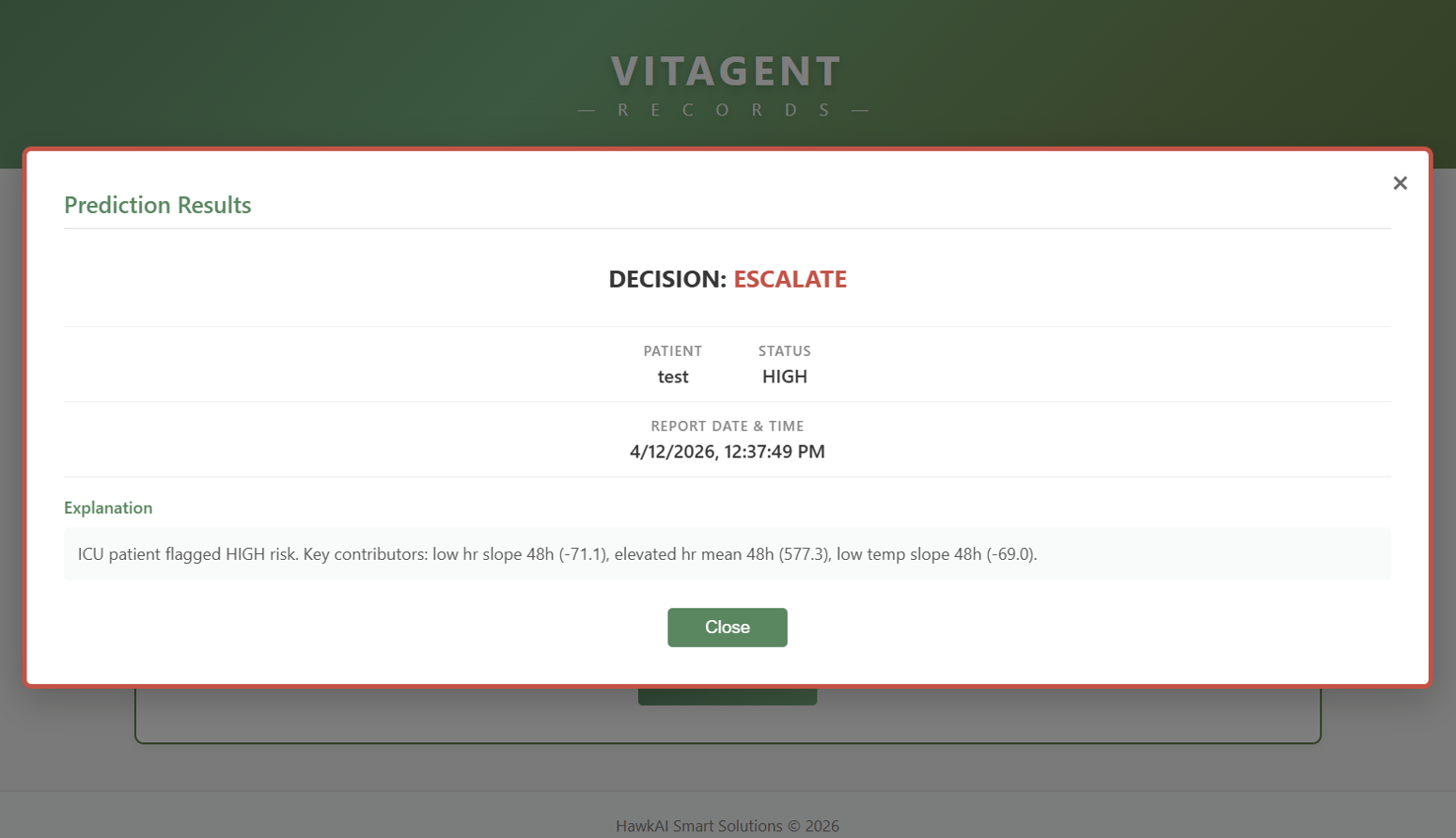
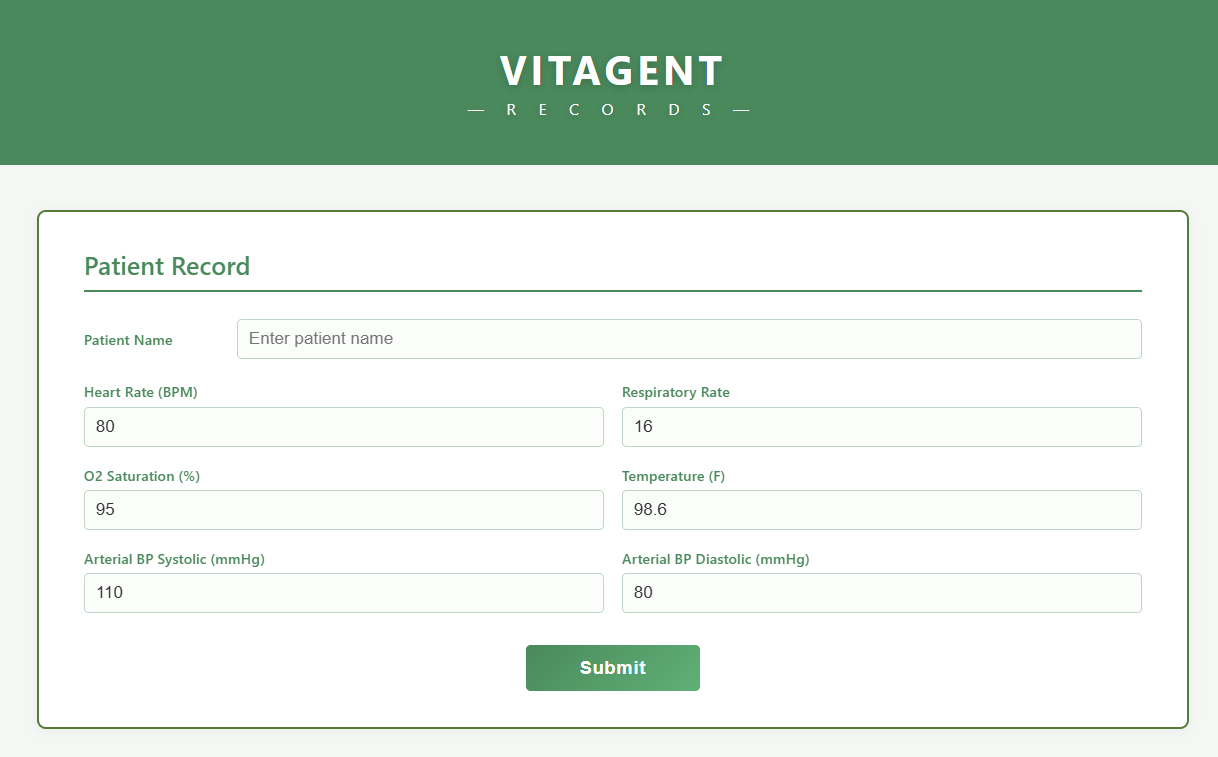
Using our Vitagent application as the springboard for this project, the CPE aimed to implement the proactive emergency response aspect for remote at-risk patients by using deep learning models to predict a patient's health risk using their historical and current vital signs.
Complex Deep-Learning Neural Network: Uses the Temporal Fusion Transformer (TFT), a customized deep-learning network using Transformers and gated residual networks to predict the patient's health risk using their current vital signs and their recent medical history.
Low-cost Lightweight Machine Learning Algorithm: Using results attained for the Vitagent project, the XGBoost Algorithm was also implemented as a baseline model for comparison, but using updated training data from preprocessing improvements.
Explainable AI (XAI): Uses the SHAPley explainability package for XGBoost to provide feature-based details to for every prediction. TFT on the other hand, produces values using charts generated from each of its components - the variable weights from the Variable Selection Network (VSN) and the attention weights from the transformer itself
Informative Risk Scoring Framework: The RSTF provides a proper channel for interpreting a select model's output into suggestive and interpretable information presented back to the user. The presentation includes a Risk Score for a granular representation of a patient's chance to have an emergency from 1-10, a Risk Tier as the tier updated from the risk score, and the a degree of error to highlight the model's confidence in that prediction.
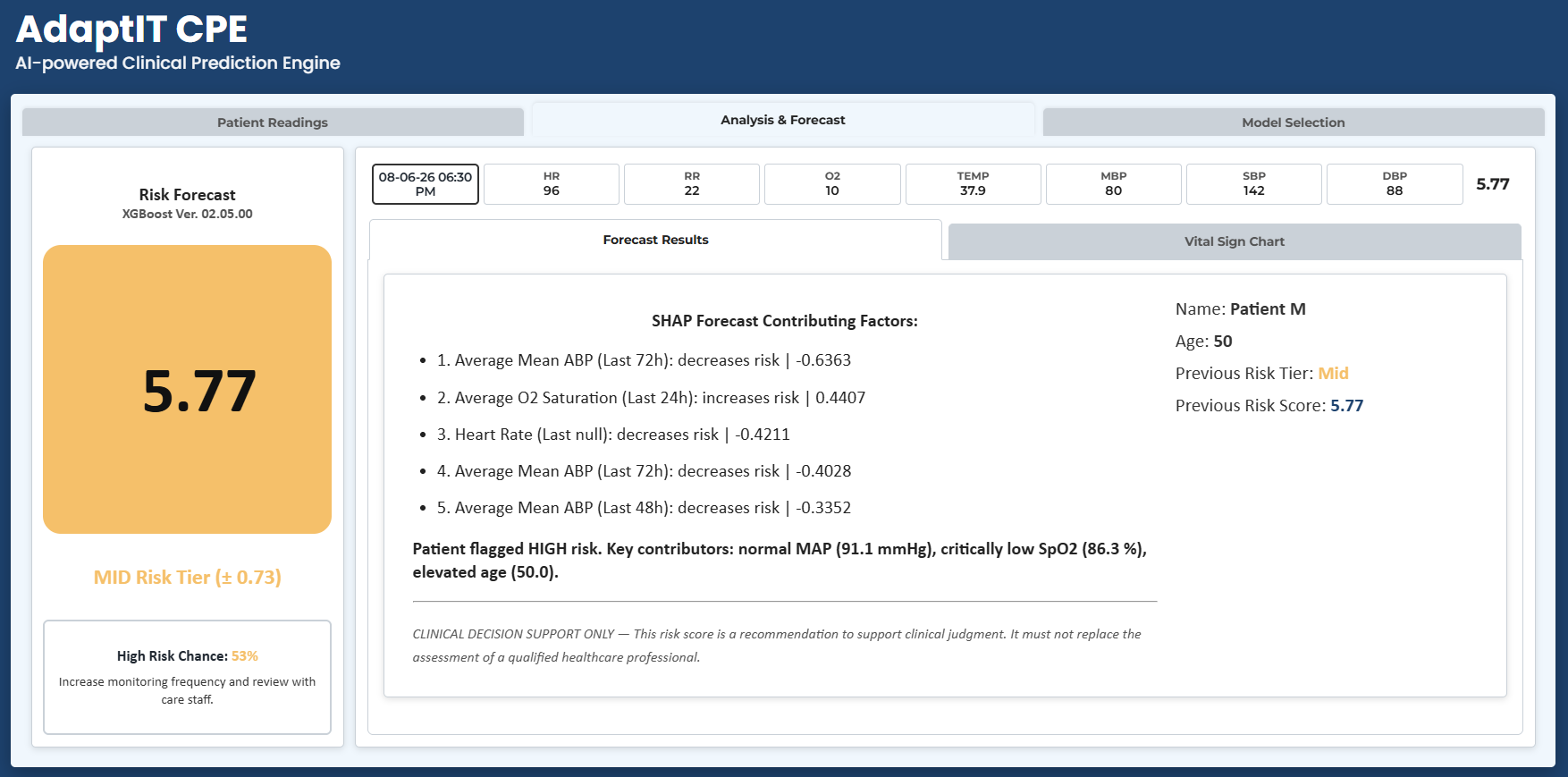
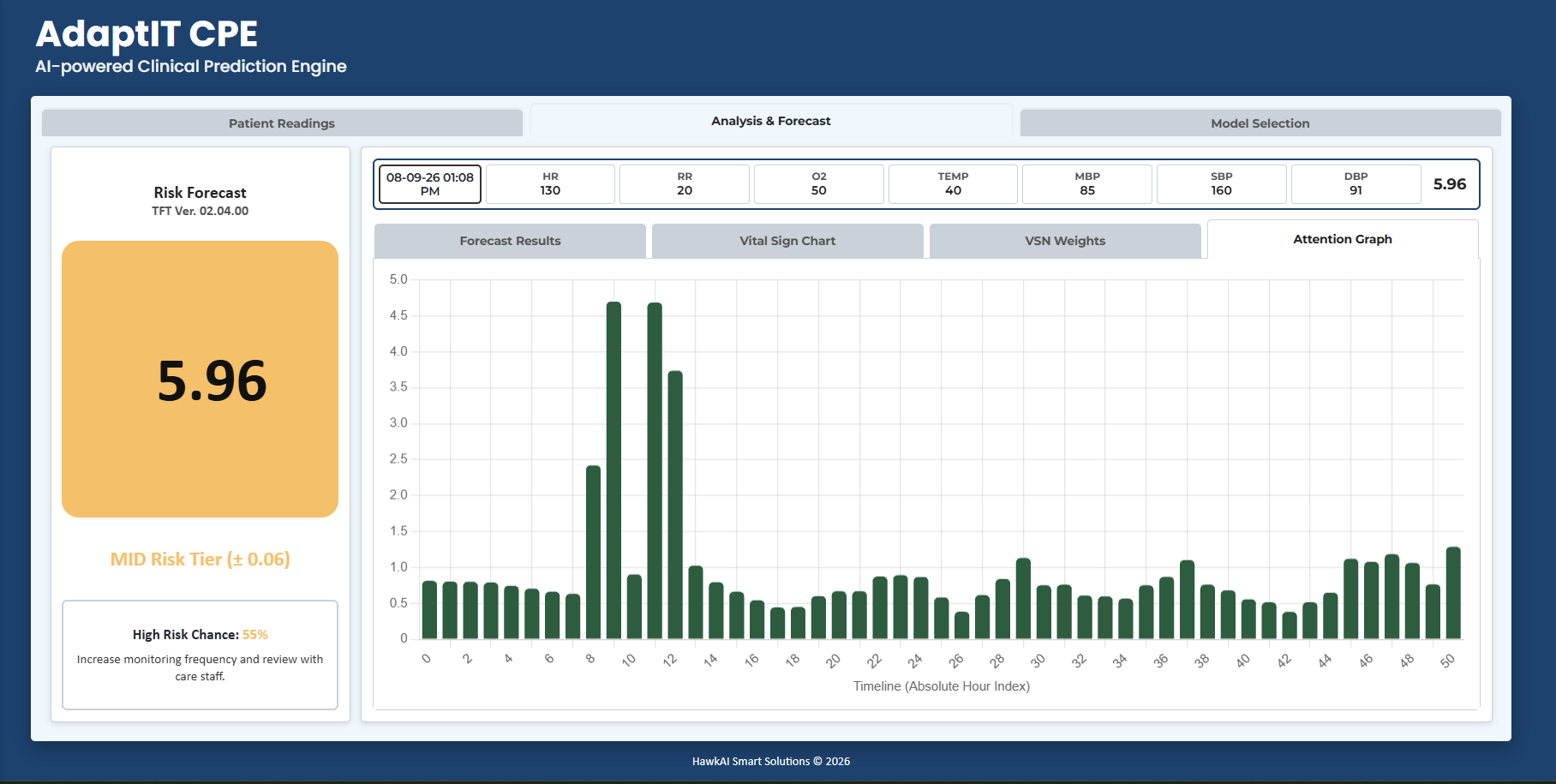
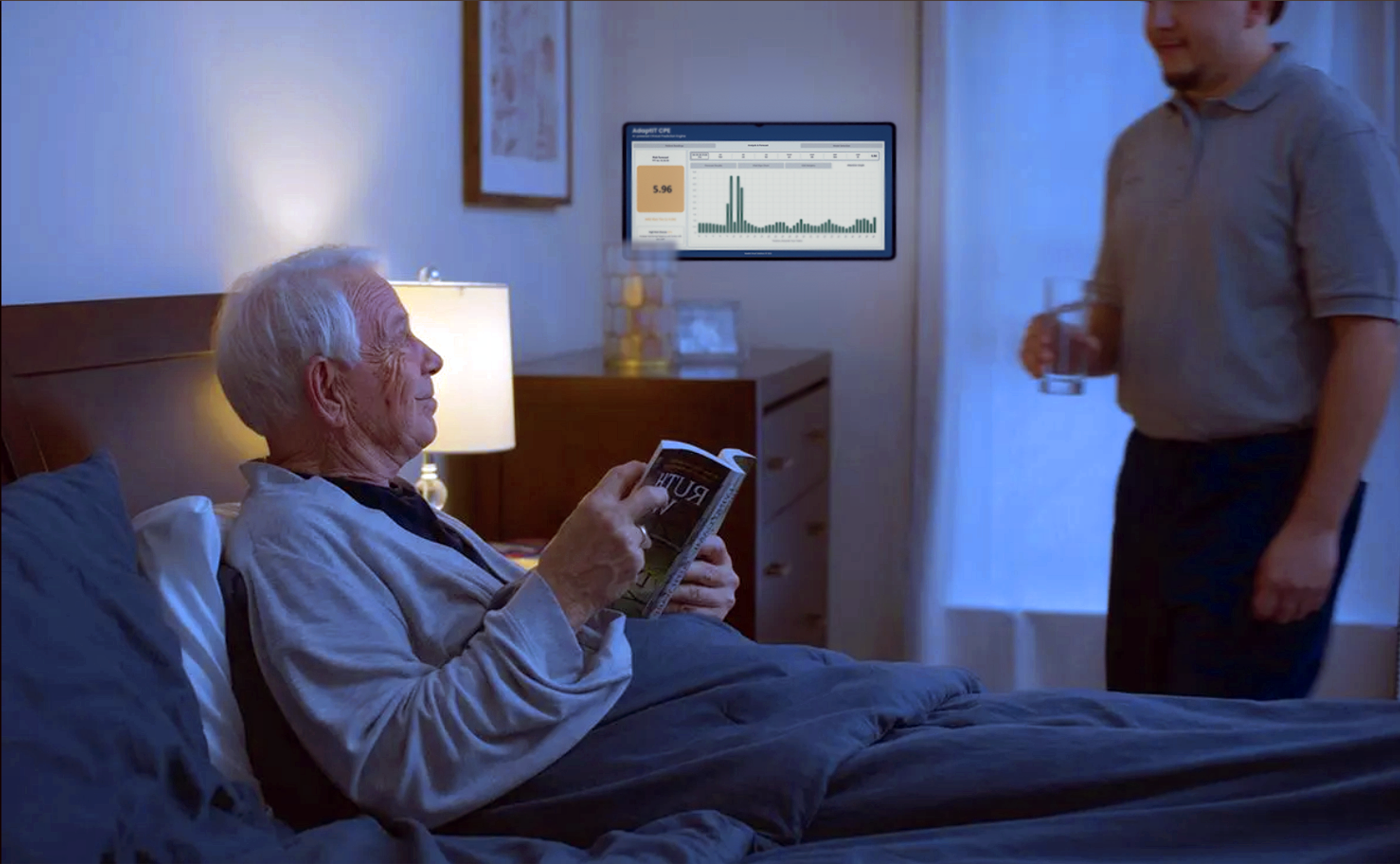 *image is concept art only. No actual product released for demo.